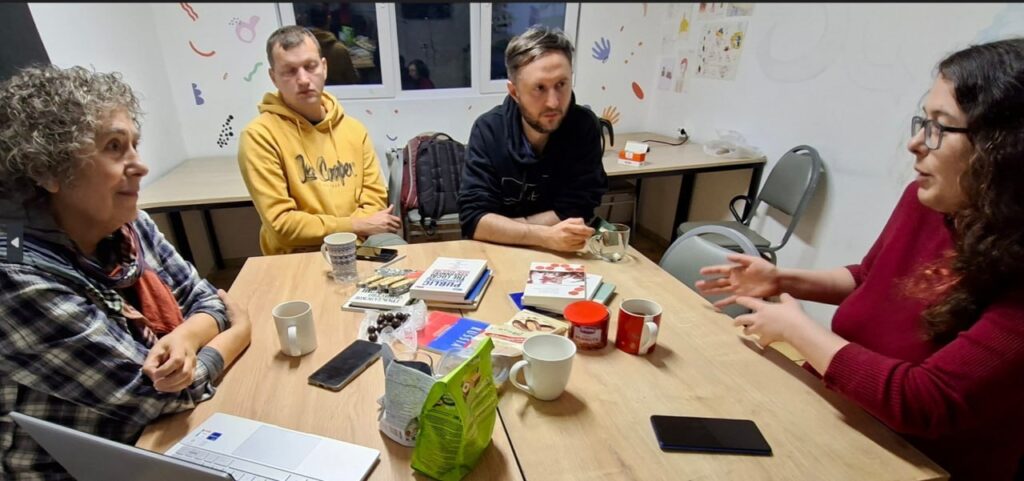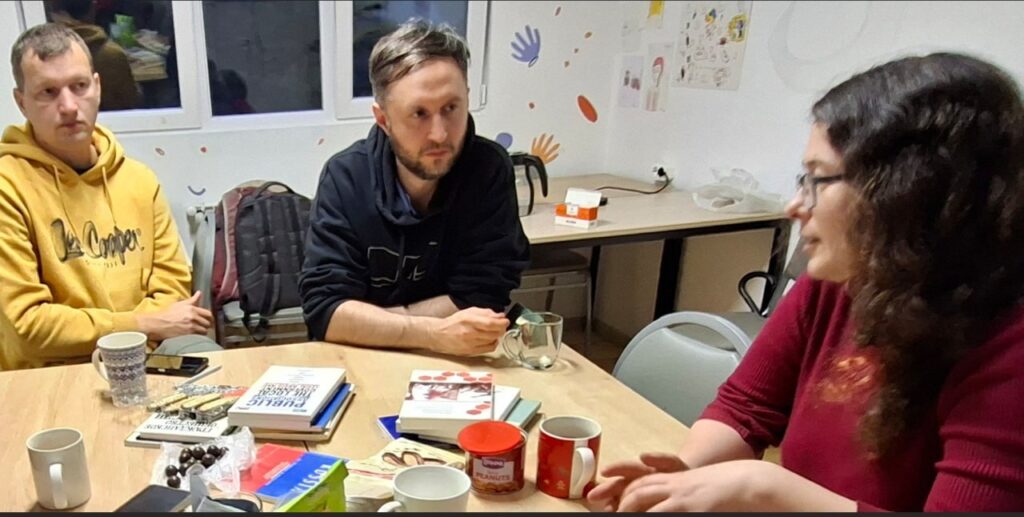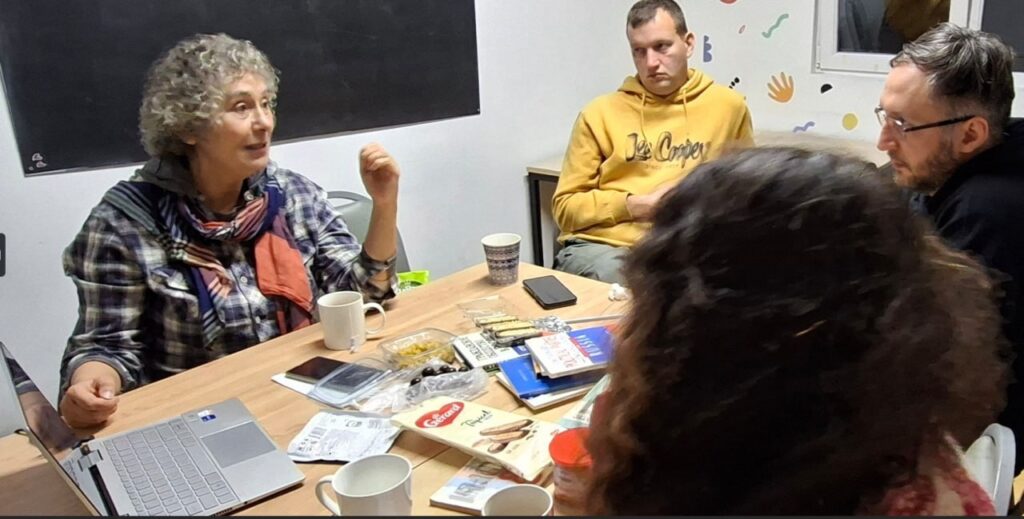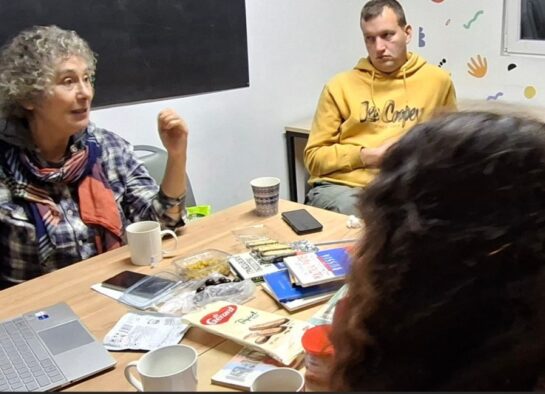
The launch of the course My Community: From Local to Global was slightly delayed, but in the end it found its home with our regular partners — Spring School 🎒 — on the same day as the course “We, the Citizens,” which allows some participants to attend both courses, complementing their knowledge of the Constitution with an understanding of how strong civic communities are formed.
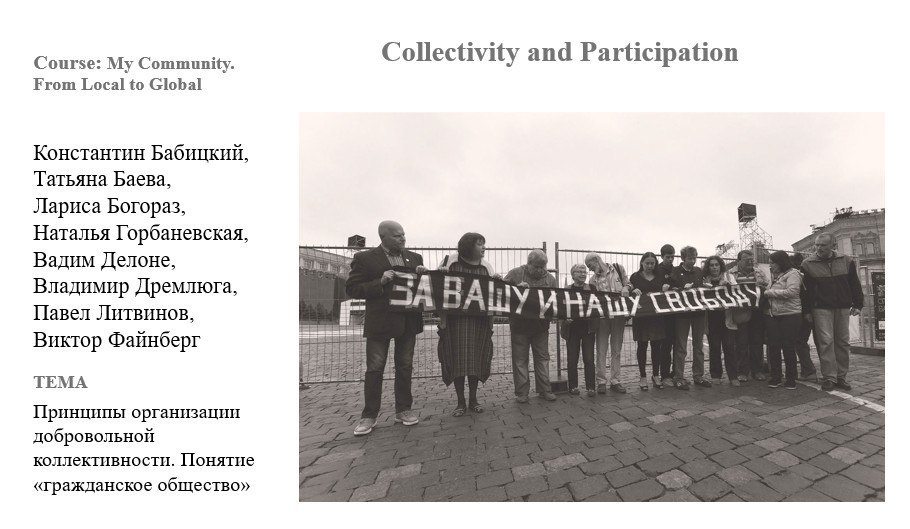
As is our tradition, we began by analyzing a well-known photograph — a replica of the famous “Red Square demonstration” by seven Soviet dissidents during the invasion of Czechoslovakia by Soviet troops.
It was encouraging that this time the course participants knew the history of the USSR quite well, which allowed us to discuss, using this example, the life of a specific civic community whose public action became an act of civil resistance to the communist regime — a process that ultimately ended with the collapse of the USSR.
Such discussions are part of my general approach to teaching the course on Communities: to examine questions of community theory through examples of specific living communities. That is why we began with the participants’ own experience of belonging to communities.
An invited “veteran of the movement,” Katya, a graduate of this course from last year,
spoke about communities of patients in mental health clinics in the United States and Russia, which became the subject of her course research;
Kirill spoke about several different and very dissimilar local communities in Kobuleti, where he currently lives;
and Zhenya spoke about the community of election observers he created in the Moscow district of Zyuzino, thanks to which opposition candidates were able to win seats in the municipal council of that district for several years.
Such community experience is a wonderful foundation for diving into the topic!
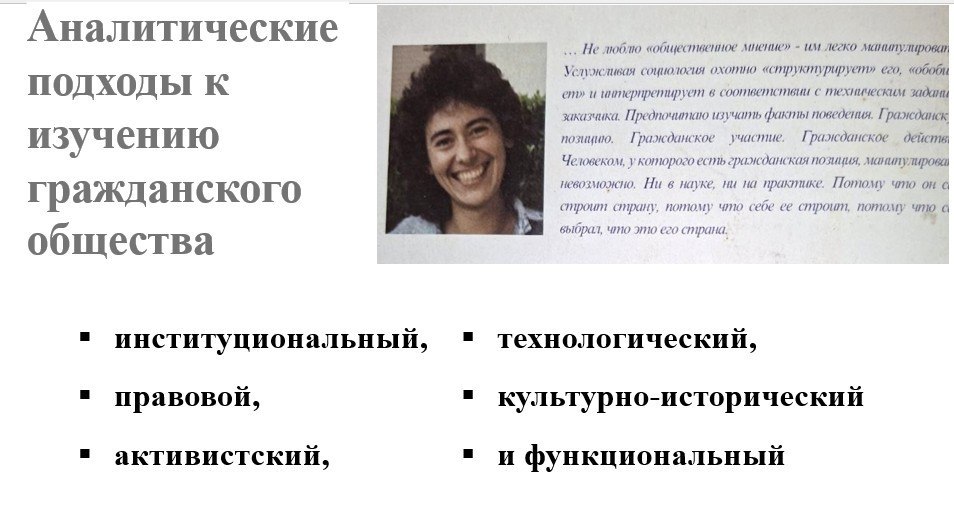
To prepare for analyzing the most diverse communities that make up the “social fabric” of organized civil society, we studied the main approaches to researching and assessing communities:
- organizational
- legal
- activist
- functional
- technological
- cultural and historical
As the experience of previous defenses has shown, these analytical approaches helped course graduates build successful Final Course Projects based on the analysis of specific communities and the results of their activities.
In everyday life, all of us always rely on a number of communities — friendly, neighborhood, professional ones. In this course, you will be able to understand why some communities are effective while others are not, and how they can be strengthened.
Join us!