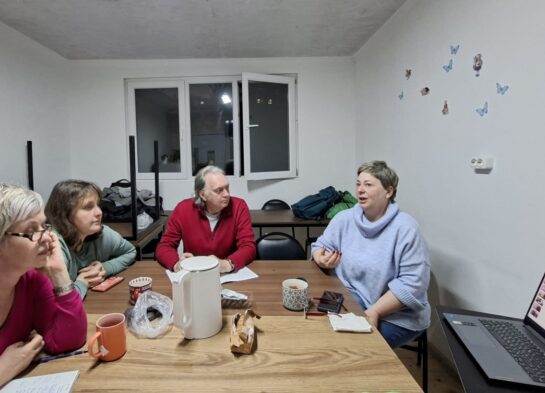
Course “Modern and Contemporary History of Sakartvelo: From the Treaty of Georgievsk to the Present Day.” At our second meeting, we examined the period of the creation and fall of the First Republic of Georgia.
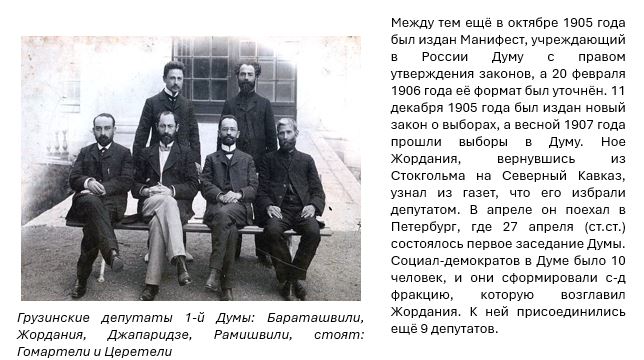
To prepare the discussion of the creation of the Republic after the collapse of the Russian Empire, we explored the life and development of Georgia before the October Revolution in Russia. Georgian industry, science, culture, and public life developed independently, while also intersecting with the democratic revolutionary development taking place in Russia itself. Documents and photographs speak volumes: for example, among the members of the Constituent Assembly of the Democratic Republic of Georgia were prominent social democrats who played a key role in proclaiming Georgia’s independence — Ioseb Baratashvili (1864–1937), a Georgian lawyer, politician, and deputy of the First State Duma of Russia from Tiflis Governorate; Noe Zhordania (1868–1953), delegate to the Second Congress of the RSDLP, leader of the Georgian Mensheviks, and Chairman of the Government of the Democratic Republic of Georgia (1918–1921); Isidore Ramishvili (1859–1937), a Georgian social democrat, Menshevik, teacher by profession, and deputy of the First State Duma of Russia from Kutaisi Governorate; Sergo (Simon) Japaridze, a social democrat and active participant in Duma activities in Russia; Simon Tsereteli, an active figure in the Menshevik Party and a deputy; and Ivan Gomarteli (1875–1938), a Georgian physician and public figure, deputy of the First State Duma from Kutaisi Governorate.
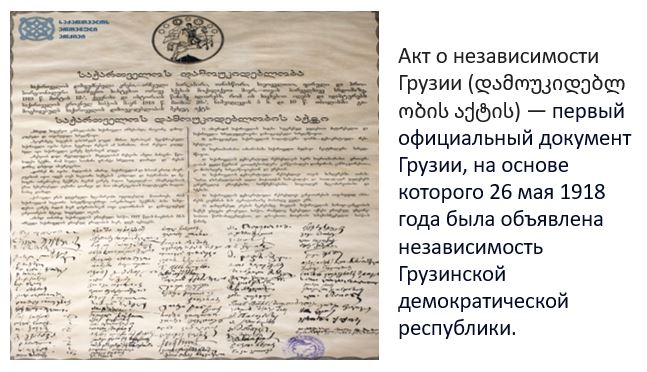
At the beginning of the 20th century, Georgia was part of the democratic movement for national self-determination. The movement toward statehood developed rapidly, culminating in the adoption of the Act of Independence in 1918, which has survived as a unique document of its time, bearing the handwritten signatures of the meeting participants.
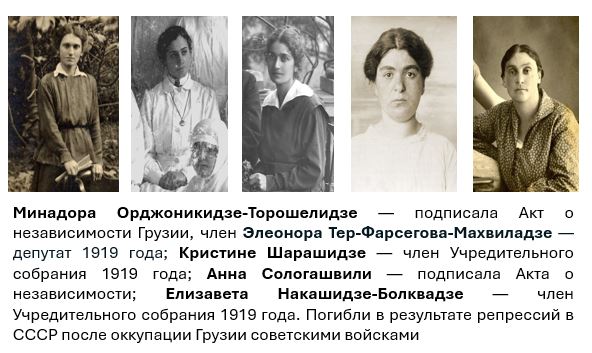
Democratic elections were held in the Georgian Republic, forming a worthy representative body to which quite a number of women were elected, including women of Muslim faith.
The Georgian Republic was suppressed in 1921 by armed detachments from Moscow led by the Bolsheviks, and the territory of Georgia was occupied by the Red Army, marking the beginning of Georgia’s “Soviet period.”
Together with the course participants, we touched upon the Treaty of Kars and discussed which external and internal factors led to Georgia’s loss of independence in 1921, and whether a different course of events had been possible.
In examining this period of Sakartvelo’s history, we use sources published in Georgia, Russia, Great Britain, and the United States, including those brought in by the course participants themselves: the most productive approach to history is comparative historiography. We hope that our discussions may grow into interesting Final Course Projects — and you, too, can take part in independent research on a period that interests you.
Join us! 🤓