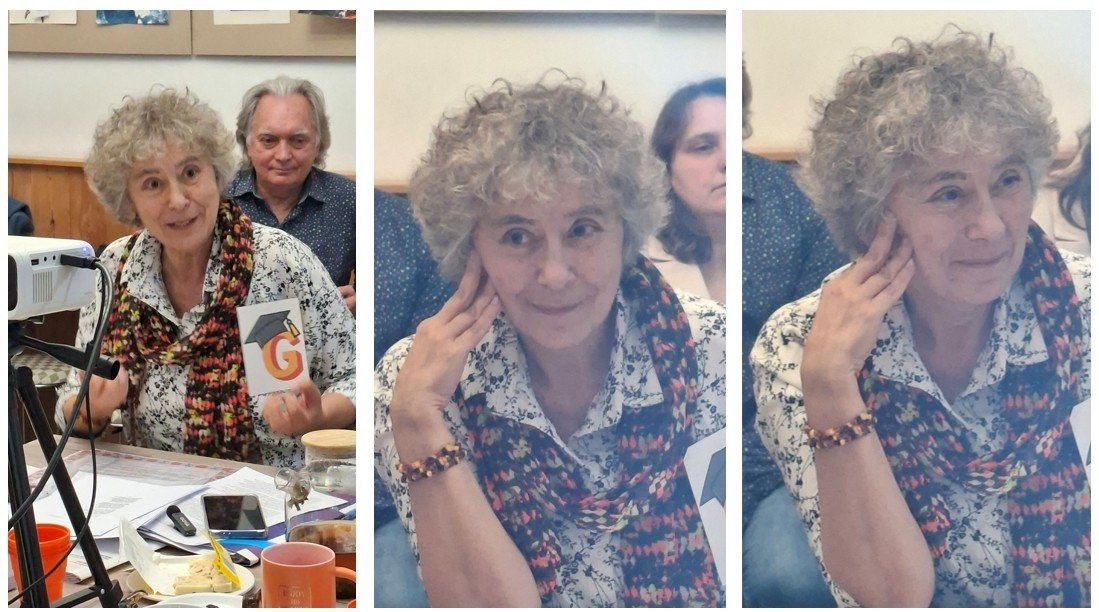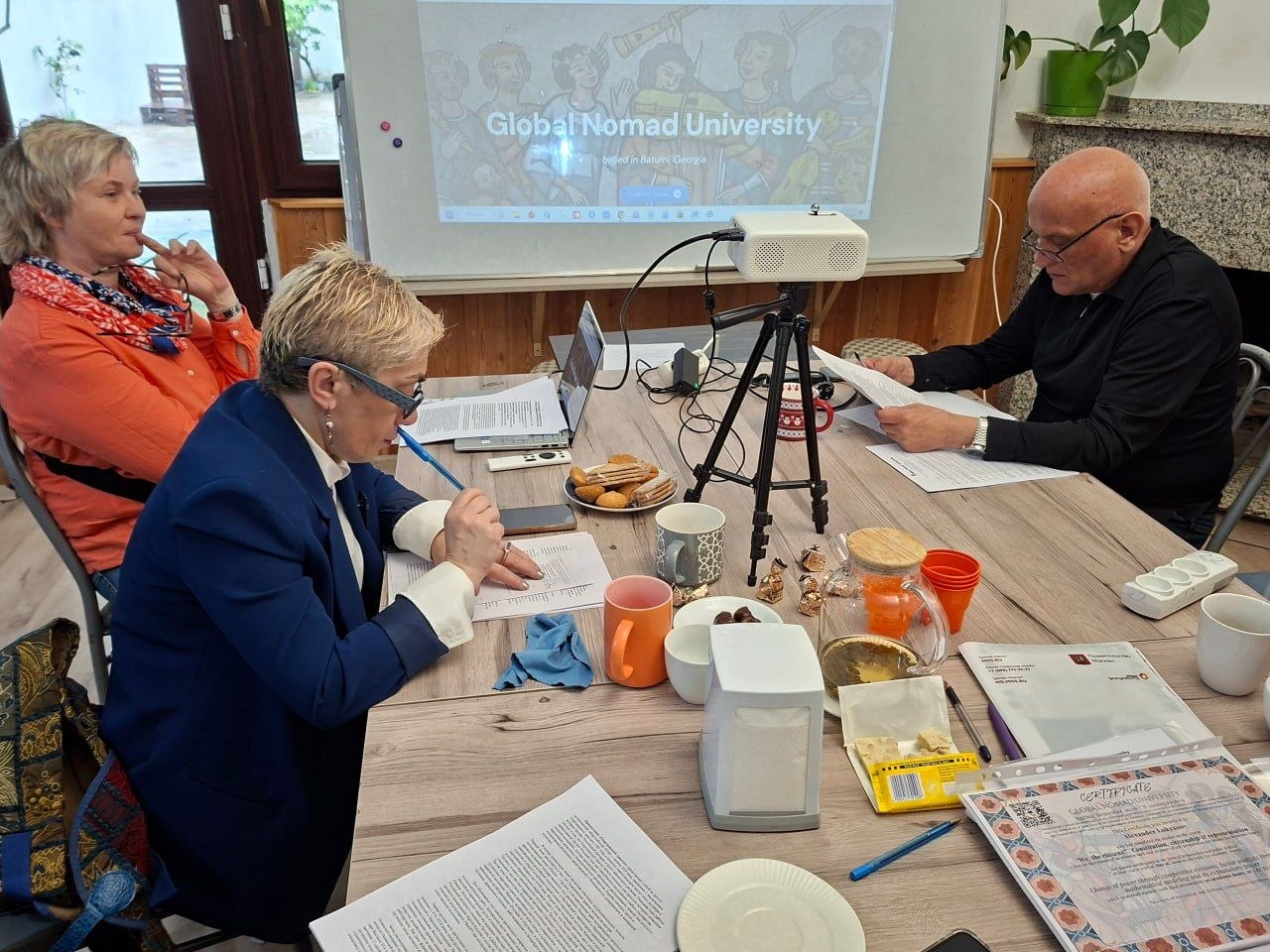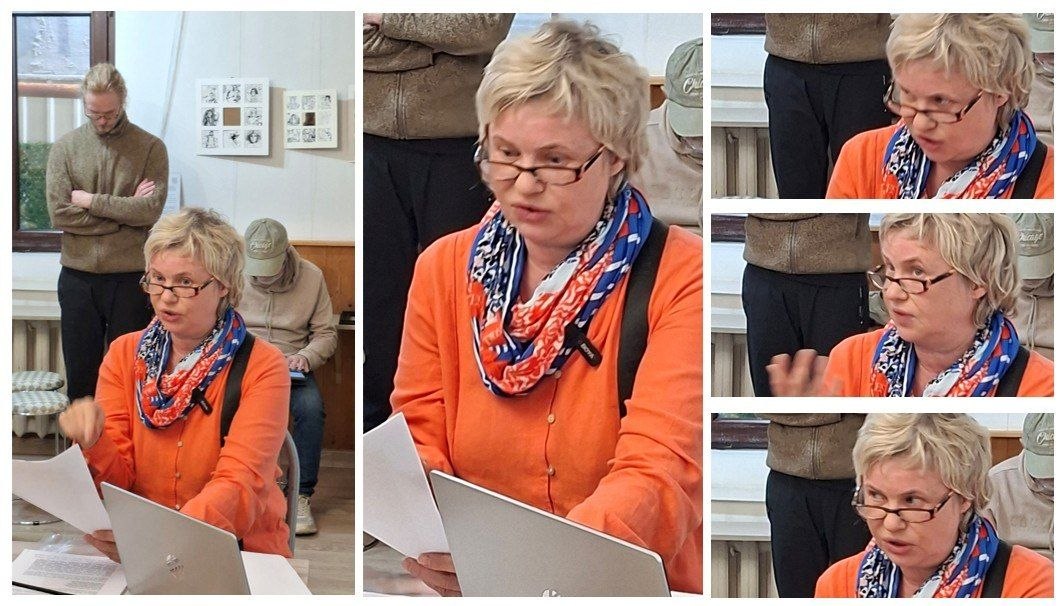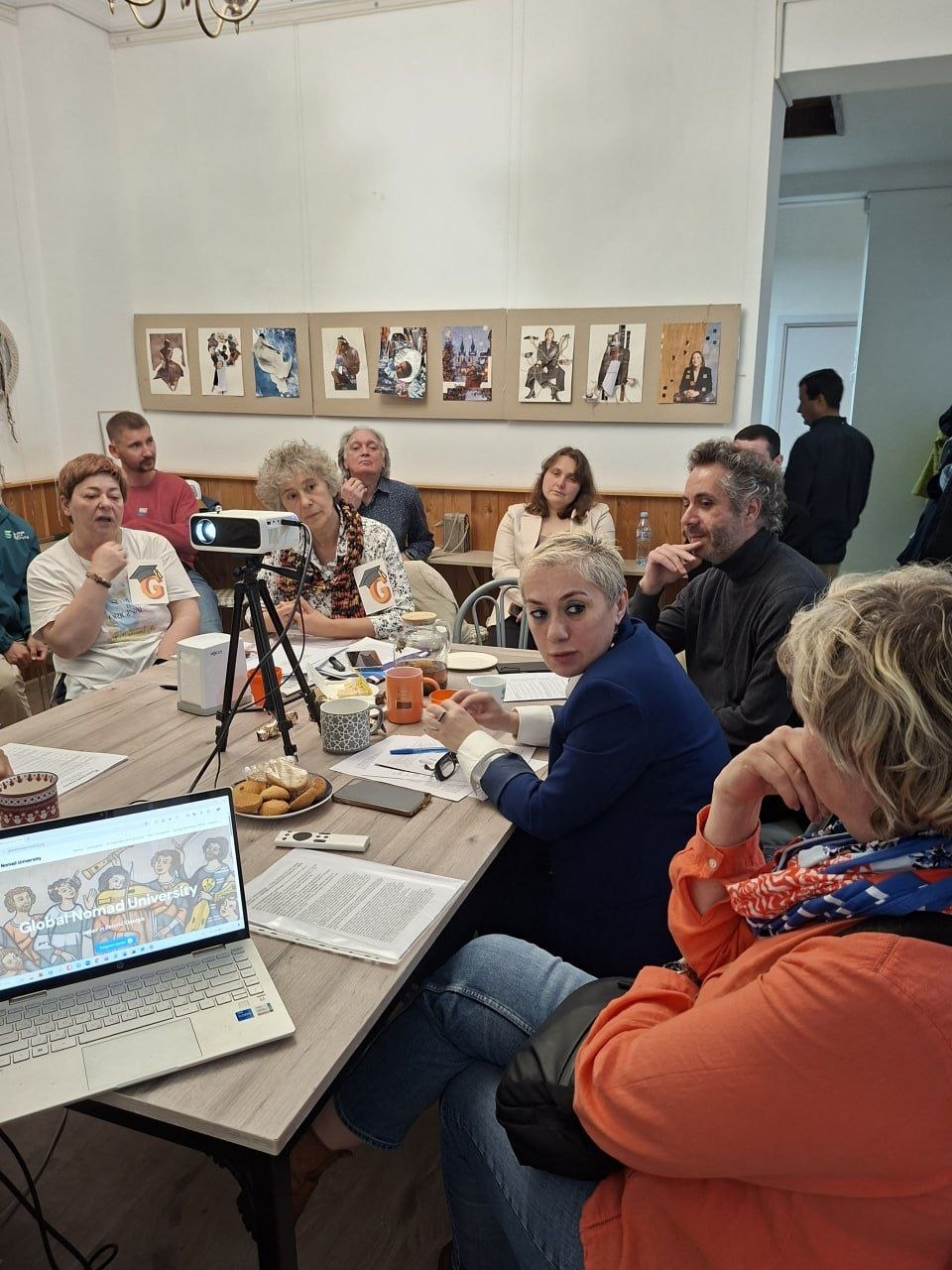
We continue publishing the best defenses of the past semester. This report focuses on the defenses from the History of Georgia course taught by the wonderful lecturer Nazi Rekhviashvili.
The History of Georgia course had the largest number of defenses — five in total. We have already written about Roman Lobusev’s defense. Here, we will tell you about two more defenses — those of Elena Lugovaya and Yuri Semykin.
Elena chose a topic she had long been interested in: the historical legacy of Ilia Chavchavadze. The following problem questions were placed at the center of her research:
what shaped Chavchavadze’s position as a thinker, writer, and statesman; to what extent his ideas — which are widely reproduced in Georgia in the form of quotations — are actually put into practice; and what exactly lies behind Chavchavadze’s famous triad: “Homeland. Language. Faith.”
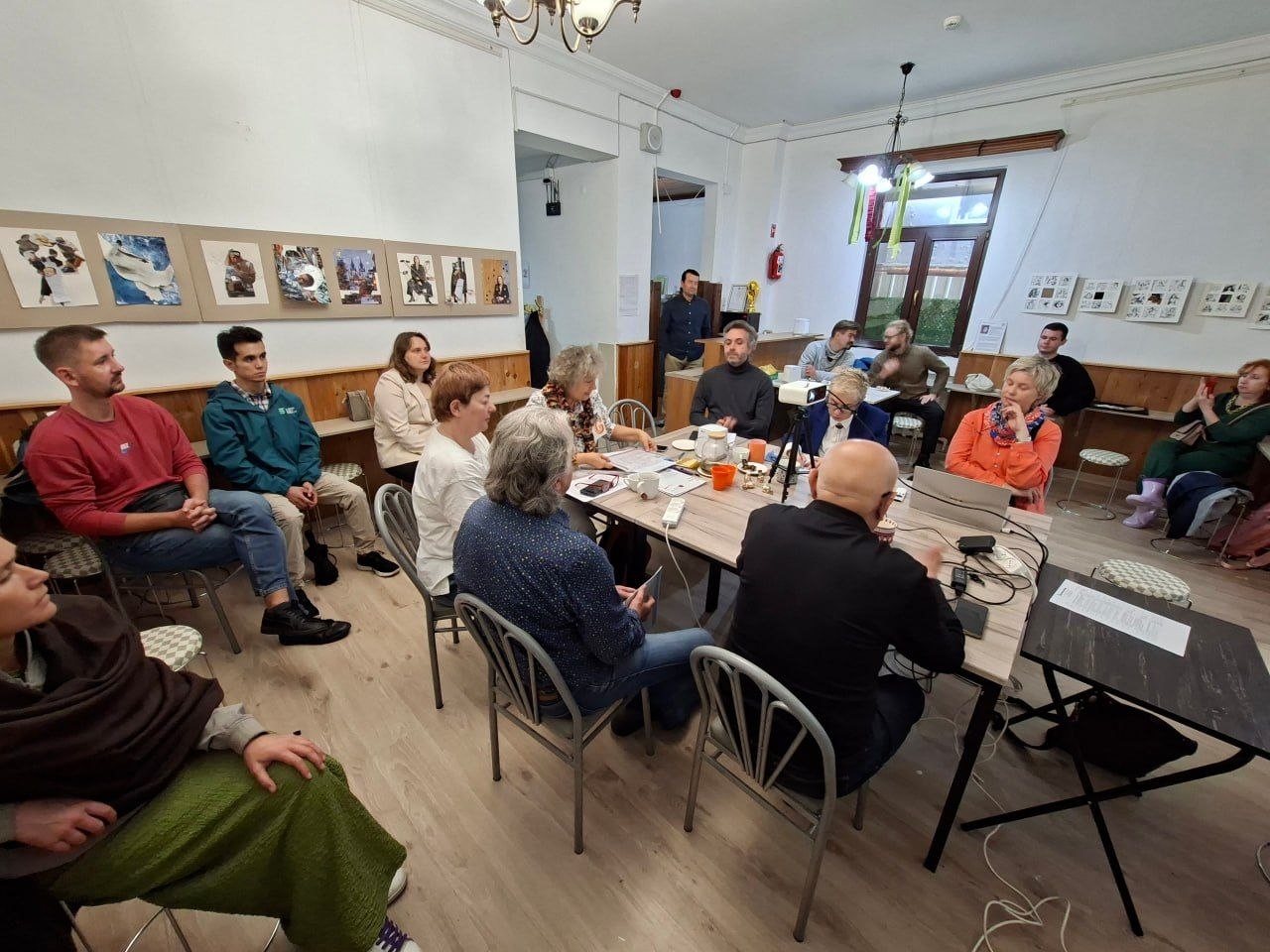
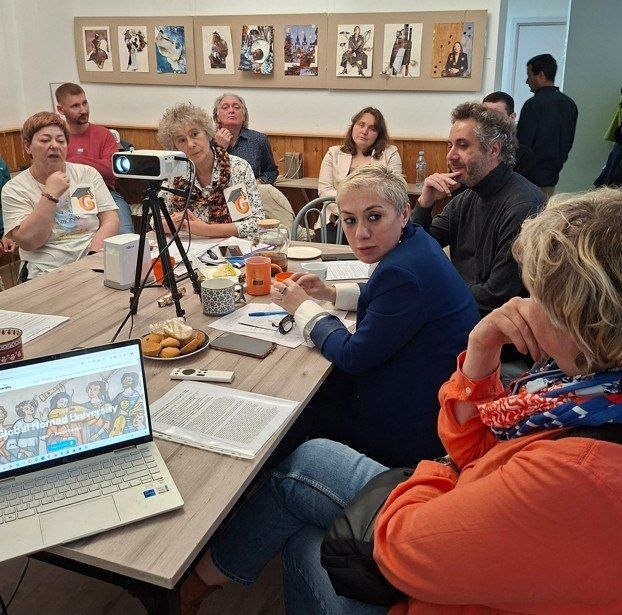
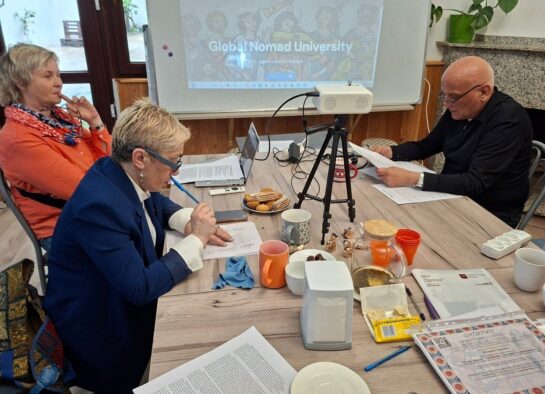
This topic, like the other four topics in the History of Georgia course, sparked genuine interest: the open defenses attracted the largest number of visitors, many of whom we saw at Nomadic University for the first time. And that is wonderful.
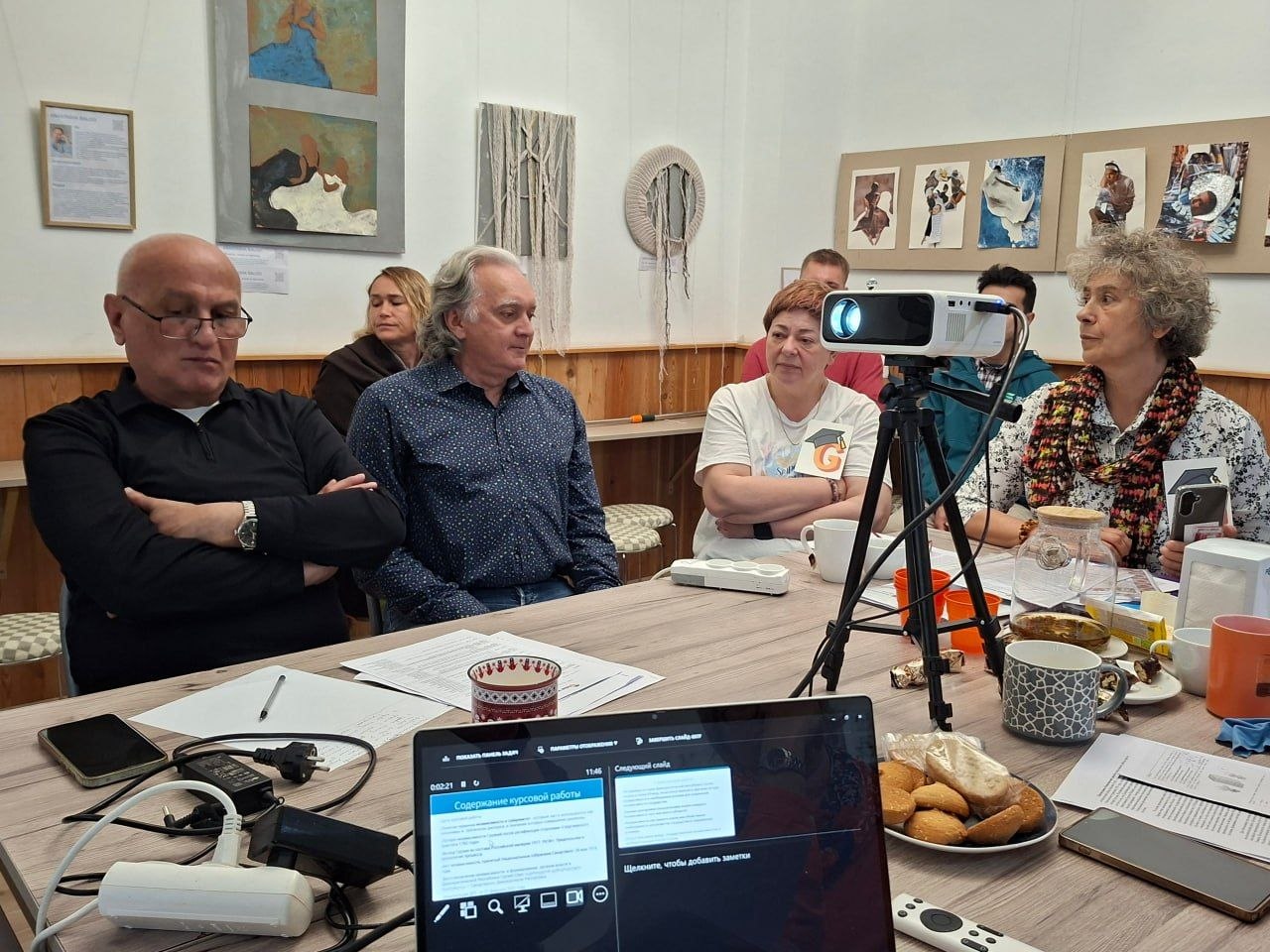
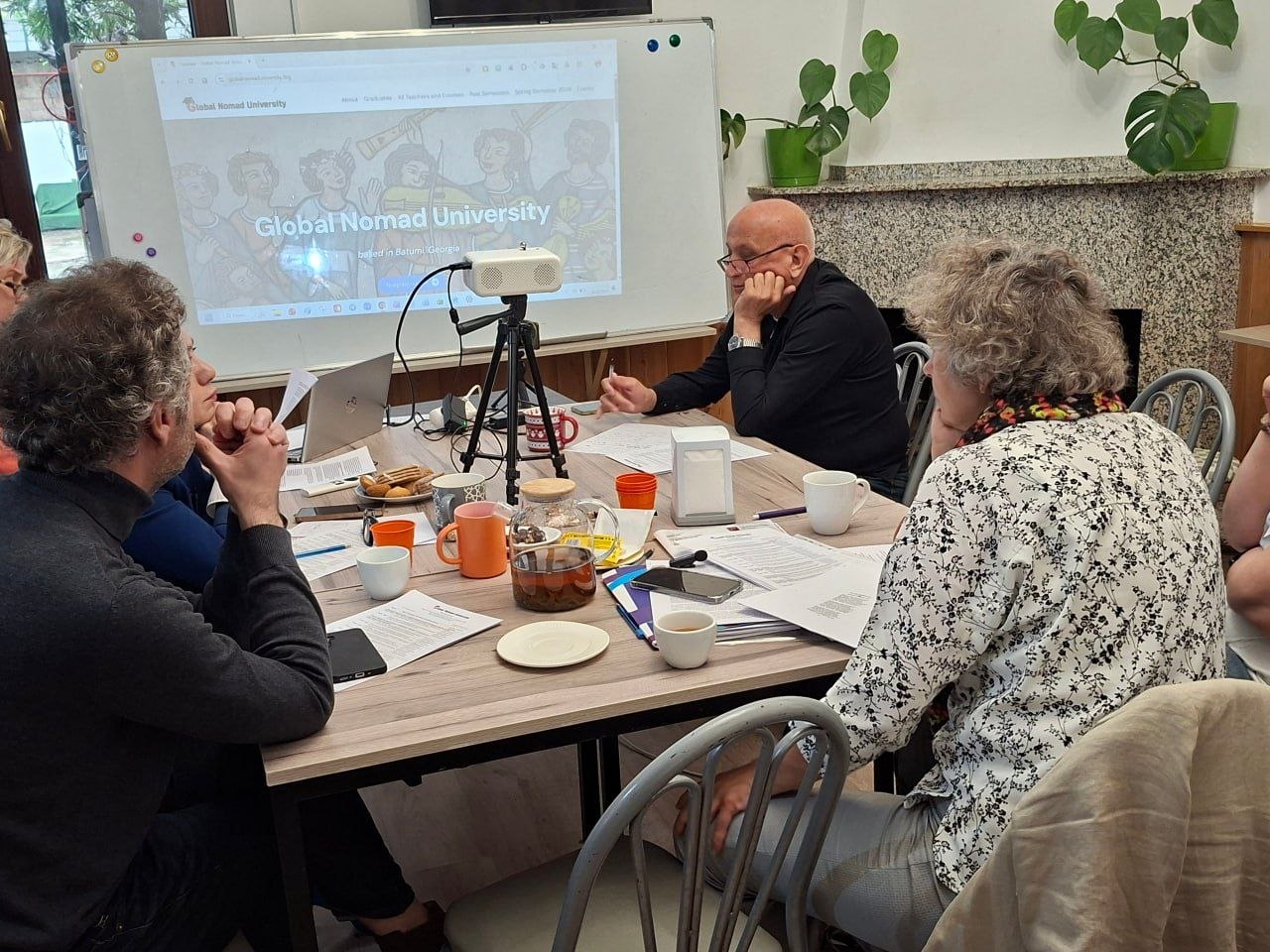
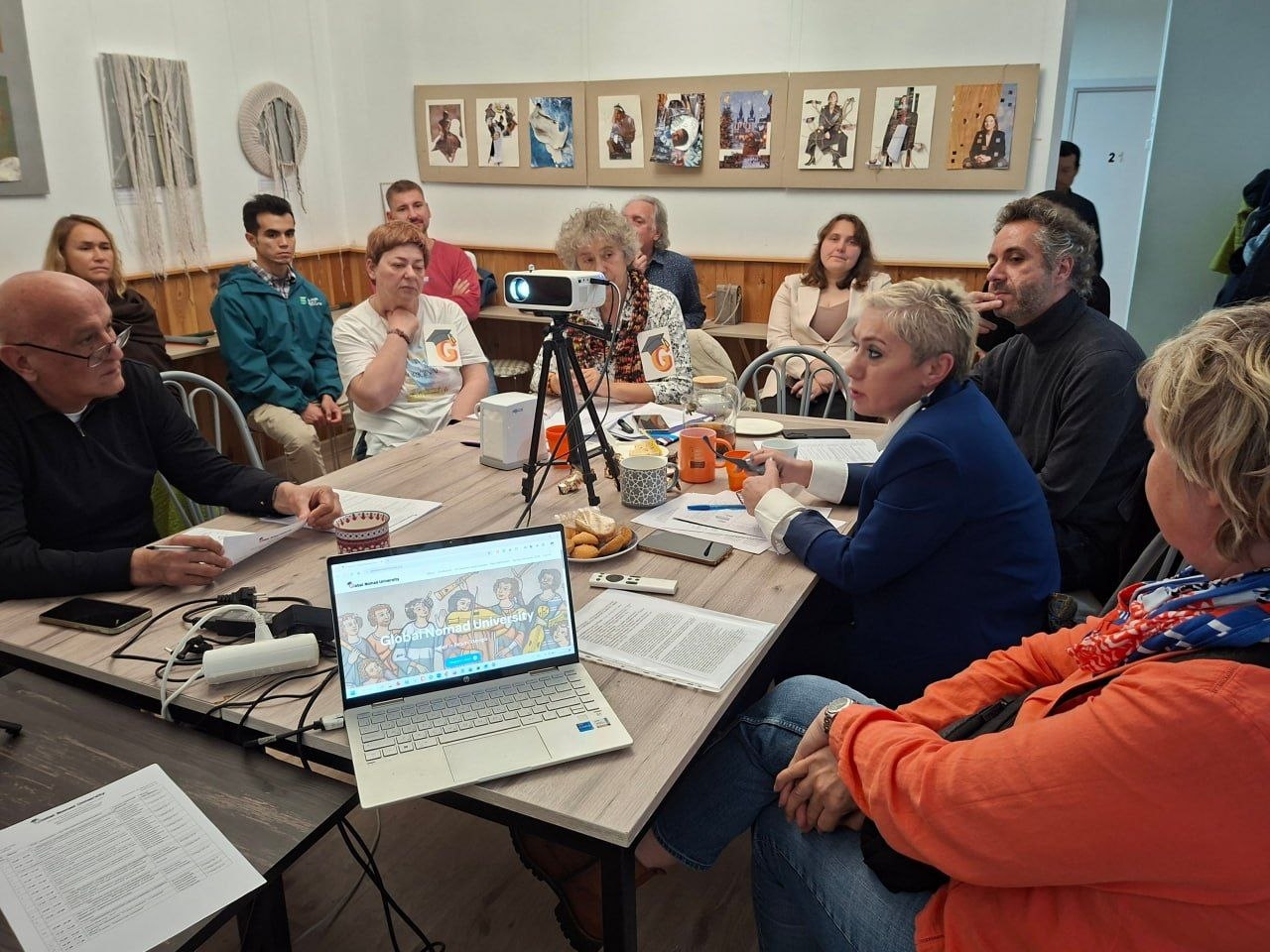
The historical issues chosen by the graduates also drew sincere interest from the members of the Defense Committee, which included the academic core of the Department of Philosophy at Batumi State University, headed by its chair, Professor Giorgiy Masalkin.
During the discussion, it became clear that the research questions of Elena’s graduation project are part of ongoing debates in Georgian academic circles. Georgian historians, philologists, and, of course, philosophers note that Chavchavadze’s famous quote is often used out of context, without regard to the time and circumstances in which it appeared, and is often interpreted in completely different ways by “liberals” and “conservatives” in Georgia. It is well known how open and liberal Chavchavadze himself was, and how much he supported horizontal relationships with all layers of society and with other cultures. Yet his statement is often interpreted as a justification for strengthening the dominance of the church over the secular state.
Elena demonstrated a deep engagement both with Chavchavadze’s own texts and with those of his interpreters. Although it was not possible to fully раскрыть the problem within the scope of a graduation project, the questions she raised about the legacy of the nation’s spiritual leader sparked an engaging discussion, and the work received high praise from the committee.
The second graduate, Yuri Semykin, was one of the first to enroll in the History of Georgia course and actively participated in all the classes, searching for additional literature and sharing it with the course participants. For his graduation project, he chose an equally complex topic: Georgia’s struggle for independence.
Yuri posed a question at the intersection of history, political science, and law: how “independence” was understood in different historical documents, from demands and appeals to formulations in documents on state sovereignty from various periods of Georgian history. In support of this topic, members of the Defense Committee noted that the question of “independence” and “freedom” is part of philosophical discourse as a whole, as well as of the contribution made to it by the Georgian philosophical school, including the renowned Merab Mamardashvili.
During the discussion of Yuri’s work, the participants touched on the evolution of legal definitions, in which the historical struggle for independence from neighboring states — occupiers of Georgian territories — transformed into the concept of “state sovereignty,” as well as the degree to which it has been realized in Georgia’s economic, military, and political spheres.
What are the ways of realizing sovereignty when surrounded by large countries, especially former empires? The committee noted Yuri’s chosen topic as promising and deserving of further research.
Both defenses, which immersed us in the history of Georgia, allowed us to connect its heroic past with the present and made us reflect on the historical path of Georgia — the country where we now live and to which we wish the fulfillment of the centuries-old aspirations of the Georgian people for national independence, development, and prosperity.