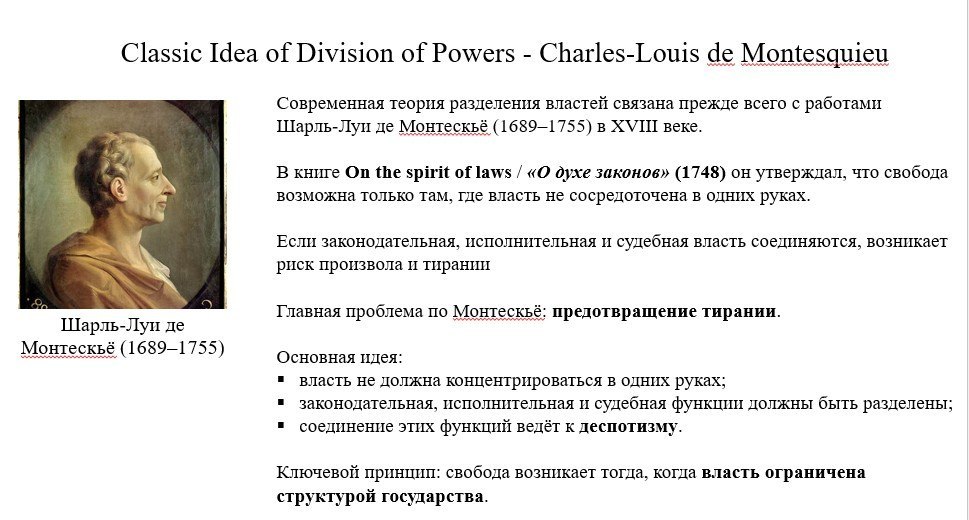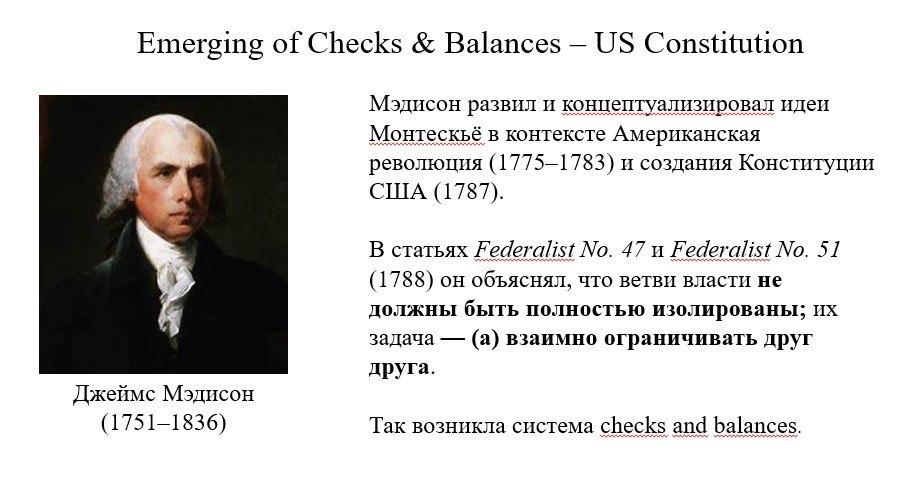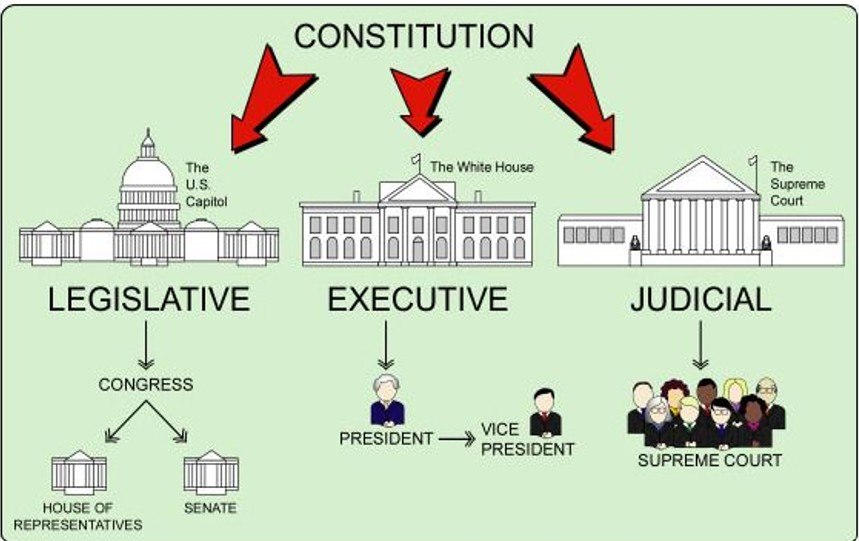
Starting with the U.S. Constitution, this system was supplemented by a crucial mechanism preventing the concentration of power in a single center, which leads to despotism — the system of Checks and Balances. In this system, the branches of government — legislative, executive, and judicial — mutually control and limit one another, creating a “balance of powers,” preventing the usurpation of power in one person’s hands, and correcting errors in governance.
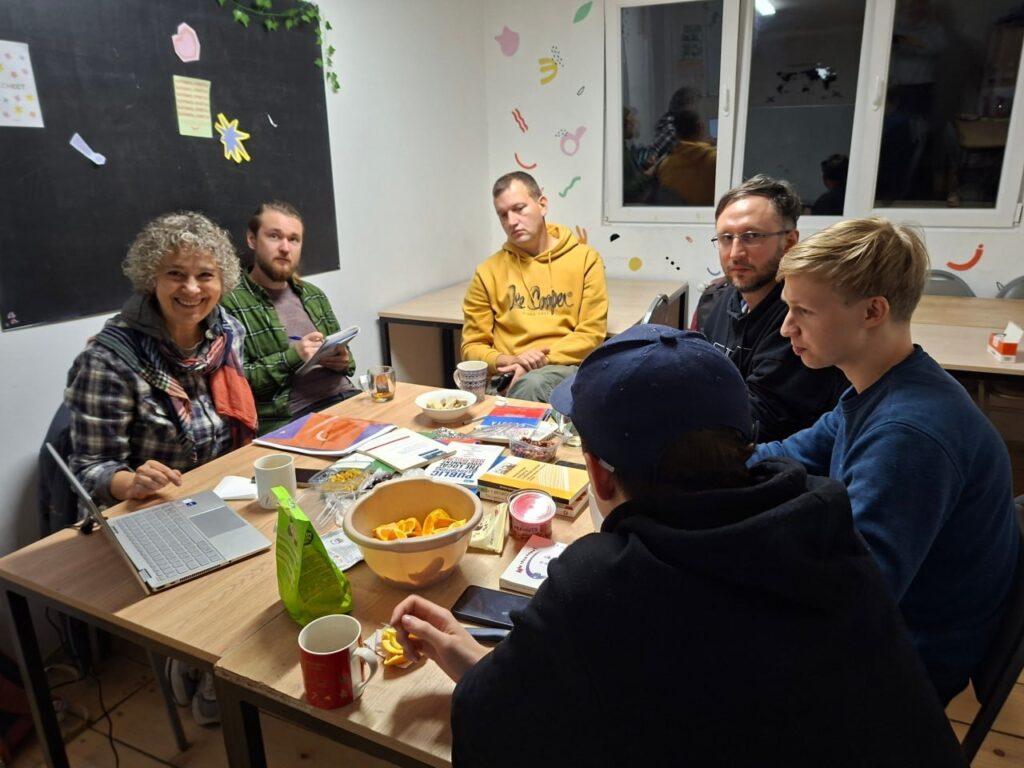
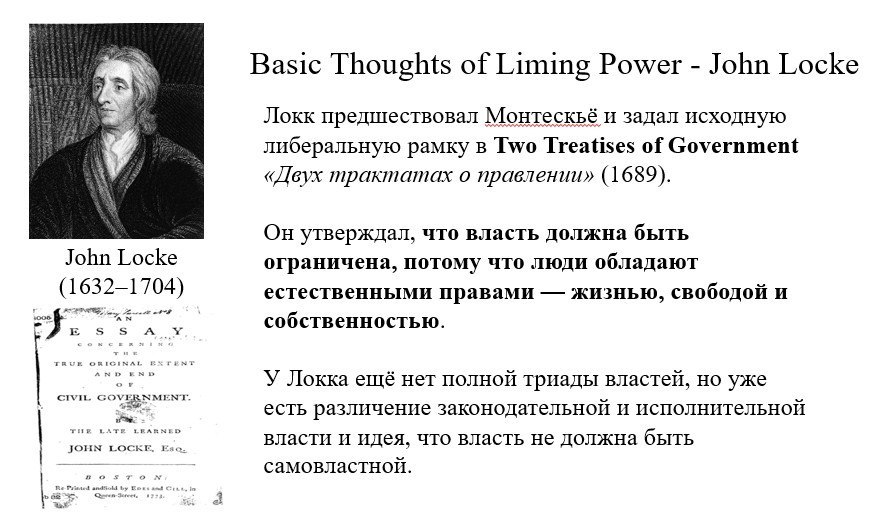
During the session, we examined the origins of the very idea of the separation of powers, which goes back to the British philosopher John Locke. We traced the development of this idea and analyzed its classic constitutional embodiment — in the U.S. Constitution.
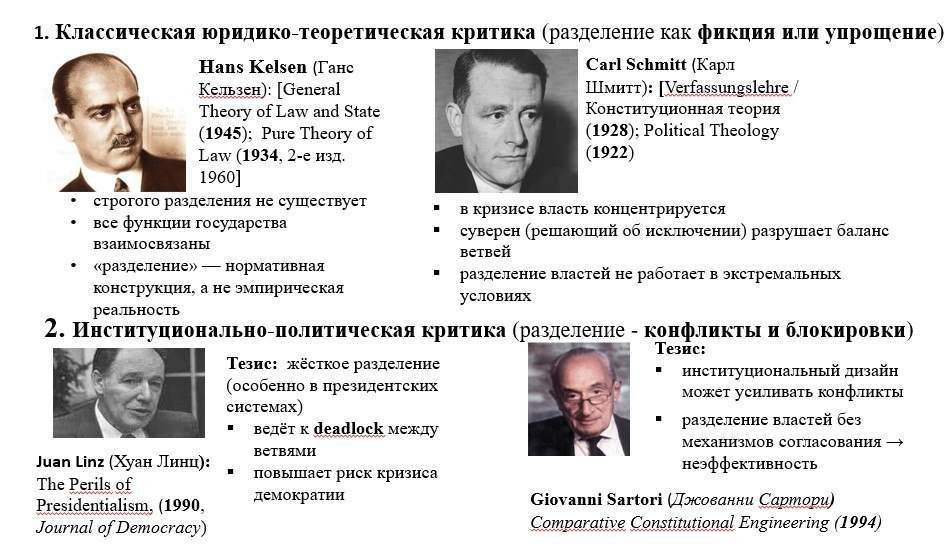
However, modern research shows that the theory of separation of powers is subject to serious criticism: a number of scholars rightly note that the “formal” separation of powers does not guarantee their “fair competition,” since in many states elites, even when located in different “branches of power,” act together — something we can see right now both in “young democracies,” such as Georgia, and in “old” ones, such as the United States. At the same time, the increasing complexity of social processes and the need for rapid decision-making are leading everywhere to the strengthening of executive power — that is, of presidents and heads of government.
Parliamentary oversight can serve as a counterbalance to this, but endless confrontation between branches of government leads to governance crises and blockouts — a paralysis of decision-making.
Oh, it is not easy to govern a modern state while observing democratic limits on power! 🤓
Taking these approaches into account, we analyzed and compared in detail the modern Constitutions of the Russian Federation and Georgia, brought in examples of the separation of powers in other countries, and paid special attention to the judiciary and the work of parliaments.
A wonderful addition to the lecture and discussion was a short, well-structured presentation by Dima, a graduate of the previous semester, who spoke about the experience of parliamentarism in the Russian Empire before the 1917 Revolution.
Knowledge of democratic institutions in one’s own history is very useful, especially if we want to think seriously about rebuilding Russian statehood on the principles of the Separation of Powers and respect for parliamentarism.
Thank you, Dima!
We will continue to use student presentations in the course.
Join us!